
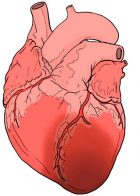





Cardiotoxicity is an alteration in the function of the heart muscle caused by certain cancer treatments, especially antineoplastic drugs such as anthracyclines. This dysfunction can progress to heart failure, one of the most serious complications in cancer patients.
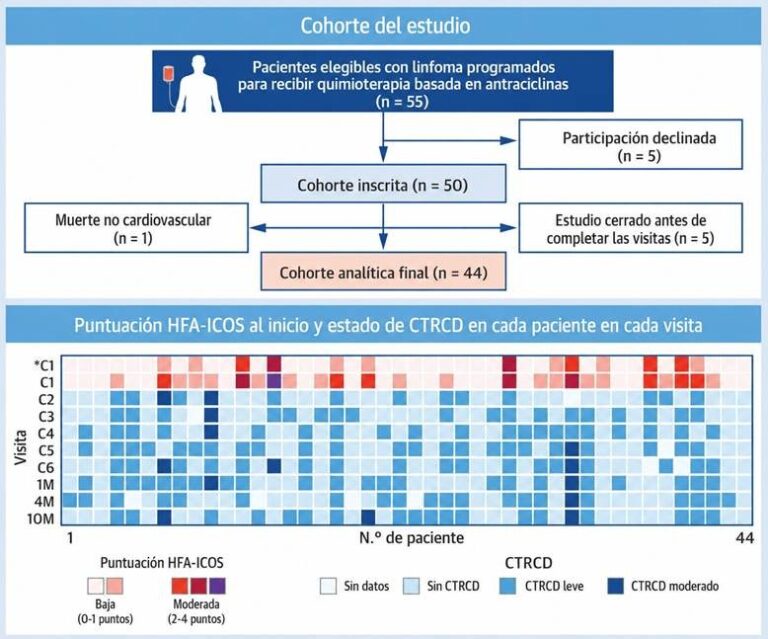
In the early stages, we speak of subclinical or preclinical cardiotoxicity, when the damage has not yet generated visible symptoms. Current diagnosis is usually based on the appearance of signs of heart failure or a decrease in the left ventricular ejection fraction (LVEF), a key parameter for assessing heart function.
The major challenge is that many patients do not present symptoms until the damage is already advanced, and traditional biomarkers often show alterations when the heart has been significantly affected.
Therefore, early detection of at-risk patients is essential.
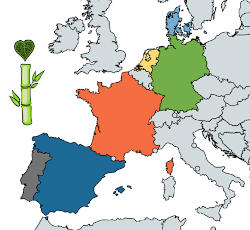
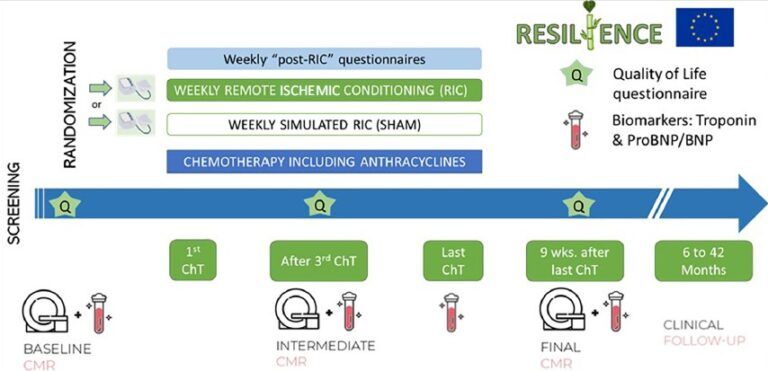
In this context, the European RESILIENCE project is investigating innovative strategies to prevent anthracycline-induced cardiotoxicity before the first symptoms appear. Through techniques such as Remote Ischemic Conditioning (RIC) and the use of new diagnostic tools, RESILIENCE seeks to reduce the risk of heart failure and protect the cardiovascular health of cancer survivors.
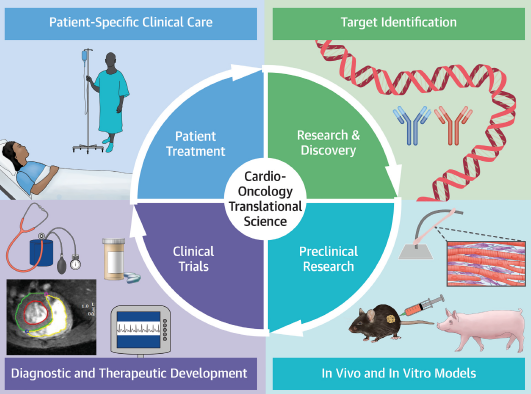
Furthermore, research into new “omics” technologies and molecular signaling pathways can offer key advances in both early detection and the development of future therapeutic targets.
Types of Cardiotoxicity
Cardiotoxicity can appear in different forms, depending on the timing and progression:
- Acute cardiotoxicity: This manifests during cancer treatment, usually with supraventricular tachycardia or other rhythm disturbances. It is usually reversible and disappears upon discontinuation of treatment.
- Chronic cardiotoxicity: This can appear up to 30 months after the last dose of the drug. It often begins with progressive cardiomyopathy, which can eventually progress to congestive heart failure (CHF).
- Late cardiotoxicity: This is a form of chronic cardiotoxicity that can appear 6 to 12 years after treatment. In some cases, it represents a relapse in patients who have already experienced an acute form and recovered.
Detecting these types of cardiotoxicity early is key to preventing major complications.
How to prevent cardiotoxicity?
Preventing cardiotoxicity is not easy because, as we have mentioned, it often doesn’t show clear signs until heart damage has already occurred.
Therefore, it is essential for cancer patients to consult with their medical team about adjusting treatment, assessing risks, and properly monitoring heart function.
Furthermore, maintaining a healthy lifestyle is a key tool for reducing cardiovascular risk, both during and after cancer treatment.
Here are some practical recommendations:
- Perform regular physical exercise tailored to each individual.
- Follow a balanced diet rich in fruits, vegetables, legumes, whole grains, and healthy fats.
- Maintain LDL cholesterol levels below 100 mg/dL. In patients at high cardiovascular risk, the goal is <70 mg/dL.
- Control glycated hemoglobin:
- Less than 7% in patients under 75 years of age.
- Between 7.5% and 8% in patients over 75 years of age.
- Completely avoid tobacco.
- Control blood pressure:
- Less than 140/90 mmHg in general.
- Less than 140/85 mmHg in patients with kidney failure or diabetes mellitus.
RESILIENCE and Cardiotoxicity
Anthracyclines remain one of the most effective treatments for various types of cancer. However, it is estimated that up to 35% of patients treated with these therapies develop cardiotoxicity and heart failure.
Faced with this challenge, the RESILIENCE clinical trial focuses on patients with lymphoma and breast cancer receiving anthracycline treatment, with the aim of evaluating an innovative intervention: Remote Ischemic Conditioning (RIC).
This technique involves briefly interrupting circulation in a limb (usually the arm) using a device similar to a blood pressure monitor. These brief stimuli trigger a protective response in vital organs such as the heart, making it more resistant to potential damage. Most notably, the procedure is non-invasive, simple, and can be performed at home by the patient.
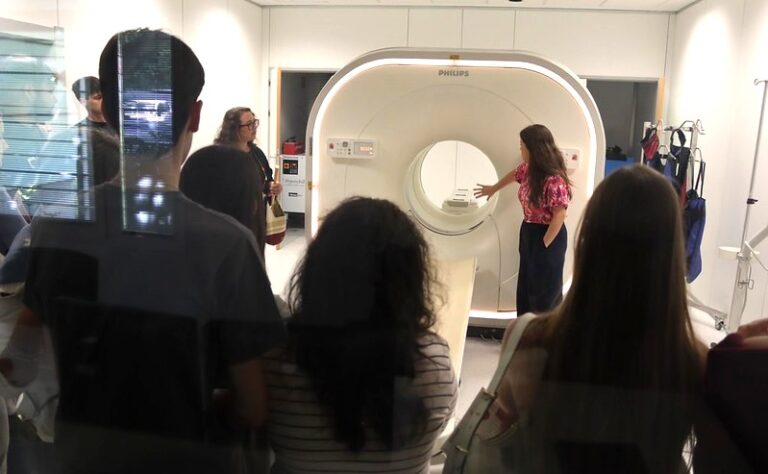
Thanks to the data collected in the study, RESILIENCE also seeks to validate two key advances in cardiac magnetic resonance imaging:
- A new early marker of cardiotoxicity.
- An optimized imaging sequence that significantly reduces acquisition time, facilitating clinical follow-up.
Furthermore, the project integrates a patient-centered strategy, encouraging their active participation in the study’s development. This includes completing quality-of-life questionnaires and assessing the effects of the intervention, which will allow a better understanding of the treatment’s true impact.
In short, cardiotoxicity remains a major complication in cancer patients. The RESILIENCE clinical trial represents a unique opportunity to reduce its incidence and improve the quality of life of cancer survivors.