'/%3E%3C/svg%3E)
'/%3E%3Cpath%20fill='%23b2b2b2'%20d='M241%20382q0%2016%2017%2026%2017%2011%2042%2011t42-11q16-11%2017-26V269H241'/%3E%3Cpath%20fill='%239f7e00'%20d='M241%20379q0%2014%208%2023%209%209%2021%209%2014%200%2021-9%209-9%209-23V269h-59'/%3E%3Cpath%20d='M241%20339v-70h59v110q0%2014-9%2023l-6%205v-68h-15v72q-8%200-14-4v-68zm59%2040c0%2022%2015%2032%2029%2032%2021%200%2030-18%2030-32v-40h-59'/%3E%3Cpath%20fill='%239f7e00'%20d='M266%20277v5h2v12h-3v-5h2v-5h-9v5h2v5h-4v9h3v18h-5v10h34v-10h-5v-18h3v-9h-4v-5h2v-5h-9v5h2v5h-3v-12h2v-5zm42%20101q0%2010%206%2017%206%206%2015%207%2010-1%2016-7%206-7%206-17v-29h-43'/%3E%3Ccircle%20fill='%230044ad'%20cx='329.5'%20cy='372'%20r='6'/%3E%3Cellipse%20fill='%230044ad'%20cx='300'%20cy='340'%20rx='16'%20ry='21'/%3E%3C/svg%3E)


'/%3E%3C/g%3E%3Cuse%20href='%23c'%20transform='matrix(-1%200%200%201%20720%200)'/%3E%3C/svg%3E)








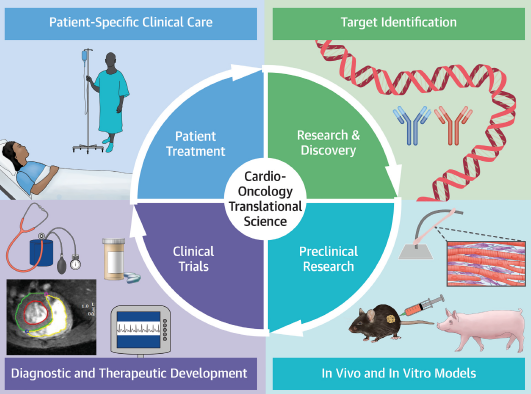
Cardiotoxicity caused by cancer treatments, such as anthracyclines, is an increasingly recognized complication. Cancer and cardiovascular diseases share risk factors along with biological mechanisms, making it necessary the development of a collaborative approach between oncology, cardiology, and hematology.
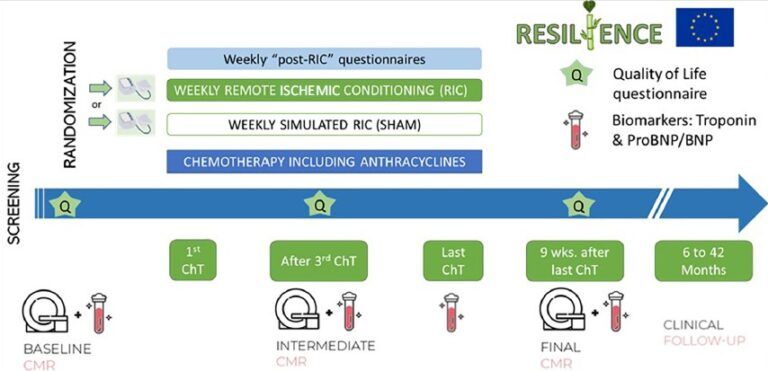
Before, during, and after treatment, active cardiovascular monitoring can detect potential heart damage, prevent heart failure, and improve the quality of life of cancer patients. This is especially important in the context of projects like RESILIENCE, which works to prevent these effects in an innovative and personalized way.
The Value of an Early Cardiovascular Assessment
Before starting cancer treatment, a comprehensive assessment of a patient’s cardiovascular health allows not only treating possible pre-existing conditions but also anticipating risks and adapting the therapeutic approach. This assessment should be maintained throughout the oncological process, with periodic follow-ups to allow early detection of any signs of deterioration in cardiac function.
Cardiovascular risk stratification is key in this process. Tools such as the SCORE scale, which considers variables such as age, sex, blood pressure, and cholesterol levels, indicate risk estimation in the general population. However, in the case of cancer patients, this assessment must be adjusted to take into account additional factors such as the type of cancer, the presence of metastases, the treatment received, or whether a chest radiotherapy or hematopoietic transplant has been performed.
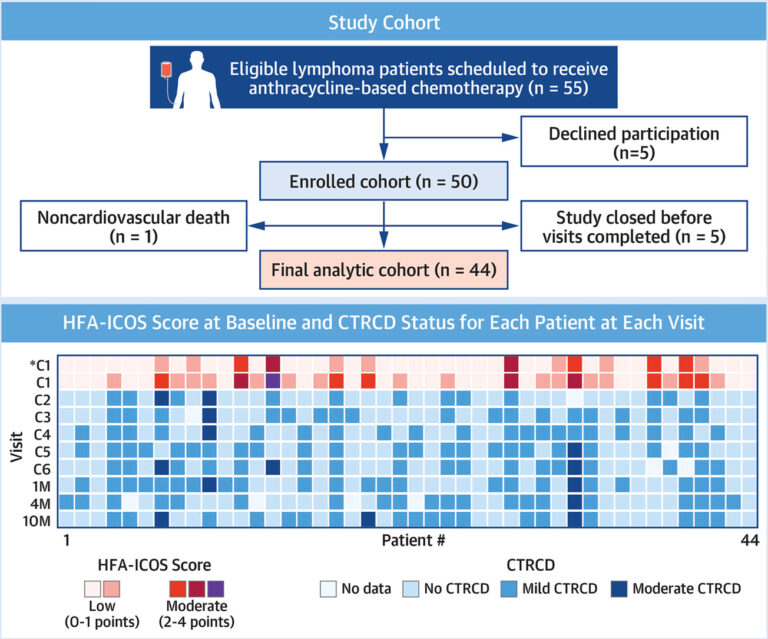
In recent years, it has been shown that this periodic risk assessment can predict the onset of severe cardiotoxicity and mortality within the first two years after treatment, especially in oncohematological patients.
How are cardiology follow-ups performed?
Proper cardiovascular surveillance involves a combination of clinical examinations, laboratory tests, and imaging tools. The frequency and type of tests will depend on the patient’s risk profile and the treatment administered.
It is essential for patients to know their cardiovascular risk (CVR), as this will allow them to understand their management goals and actively commit to achieving them.
To achieve this, a thorough clinical evaluation and careful physical examination are necessary throughout the oncology process, with the aim of detecting early signs and symptoms of cardiovascular disease. The main surveillance strategies include:
- Strict blood pressure monitoring: This should be performed at every medical visit, and also at home with a daily blood pressure reading during the first treatment cycle, after each dose increase, and weekly thereafter, provided no significant changes are detected. The frequency of monitoring will depend on the type of anticancer drug used.
- Serial electrocardiograms: In patients at risk of arrhythmias, electrocardiograms will be monitored based on the treatment administered and the onset of symptoms.
- Blood tests: Cardiac markers will be measured at baseline and periodically thereafter, depending on the type of anticancer treatment, the patient’s risk, and their clinical condition. Elevated levels of these markers may be an early indication of cardiotoxicity.
- Imaging tests: Echocardiograms and cardiac magnetic resonance imaging should be performed based on each patient’s individual risk, both at the beginning, during, and at the end of anticancer treatment, and whenever new cardiac symptoms appear.
Prevention also involves lifestyle choices
Beyond clinical follow-up, cardiotoxicity prevention includes addressing modifiable risk factors. A balanced diet, based on the Mediterranean diet, and regular physical activity are key pillars. Generally, at least 150 minutes of moderate exercise per week is recommended, combined with strength training if possible.
In patients at high risk of cardiotoxicity, adapted cardiac rehabilitation programs have been shown to be safe and effective both during and after cancer treatment.
It is also important to address toxic habits: quitting tobacco is a priority, and the use of e-cigarettes should be avoided due to their potential interaction with some treatments. Alcohol consumption should be limited and tailored to the individual clinical context. Likewise, body weight control is essential, as obesity is a risk factor for both cancer and cardiovascular disease.
Tailored Follow-Ups for Each Patient
Not all cancer patients have the same cardiovascular risk, which is why personalized follow-up is essential. Those at low risk and without symptoms may benefit from an annual check-up with basic laboratory tests, while patients at intermediate or high risk should undergo more frequent monitoring, including electrocardiograms, lipid profiles, and blood glucose monitoring.
It is important to mention that, as this is a personalized follow-up, the physician will evaluate each case and determine the type of monitoring and controls needed based on each patient’s risks.
In certain cases, such as patients with a high risk for peripheral arterial disease, it is recommended to supplement the evaluation with specific tests such as the ankle-brachial index.
Taking care of the heart does not end when cancer treatment ends. On the contrary: it is then that a new stage begins, in which cardiovascular prevention becomes more important than ever.
Through the RESILIENCE project, we continue working hard to protect the health of cancer patients beyond the cancer cure, with the goal of preventing heart failure and promoting a full and lasting recovery.