








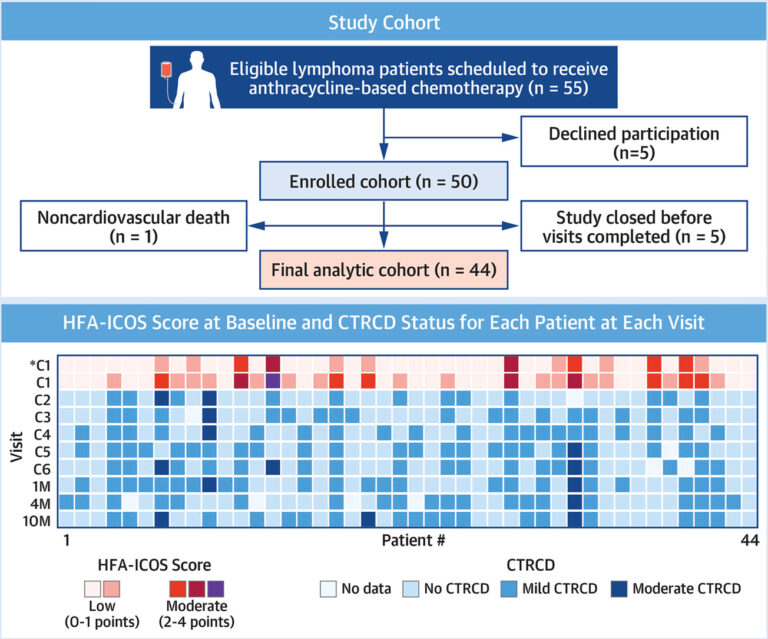


This article explains the evaluation carried out in the MATRIX study on the clinical value of intensive cardiac surveillance in low- to intermediate-risk lymphoma patients receiving anthracycline-based chemotherapy. Among 44 patients followed for 10 months, no cases of symptomatic heart failure, cardiovascular death, or major cardiovascular events were observed. Although cancer therapy-related cardiac dysfunction (CTRCD) was identified in up to 48% of patients using current ESC criteria, most findings were mild, transient, and largely driven by biomarker elevations rather than clinically meaningful cardiac deterioration.
The results suggest that routine intensive multimodality monitoring may have limited short-term clinical yield in lower-risk patients. These findings support a more risk-stratified cardio-oncology surveillance approach, helping optimize resource use while maintaining patient safety. Larger studies with longer follow-up are needed to determine the long-term value of imaging and biomarker-based monitoring for anthracycline cardiotoxicity.