'/%3E%3C/svg%3E)
'/%3E%3Cpath%20fill='%23b2b2b2'%20d='M241%20382q0%2016%2017%2026%2017%2011%2042%2011t42-11q16-11%2017-26V269H241'/%3E%3Cpath%20fill='%239f7e00'%20d='M241%20379q0%2014%208%2023%209%209%2021%209%2014%200%2021-9%209-9%209-23V269h-59'/%3E%3Cpath%20d='M241%20339v-70h59v110q0%2014-9%2023l-6%205v-68h-15v72q-8%200-14-4v-68zm59%2040c0%2022%2015%2032%2029%2032%2021%200%2030-18%2030-32v-40h-59'/%3E%3Cpath%20fill='%239f7e00'%20d='M266%20277v5h2v12h-3v-5h2v-5h-9v5h2v5h-4v9h3v18h-5v10h34v-10h-5v-18h3v-9h-4v-5h2v-5h-9v5h2v5h-3v-12h2v-5zm42%20101q0%2010%206%2017%206%206%2015%207%2010-1%2016-7%206-7%206-17v-29h-43'/%3E%3Ccircle%20fill='%230044ad'%20cx='329.5'%20cy='372'%20r='6'/%3E%3Cellipse%20fill='%230044ad'%20cx='300'%20cy='340'%20rx='16'%20ry='21'/%3E%3C/svg%3E)


'/%3E%3C/g%3E%3Cuse%20href='%23c'%20transform='matrix(-1%200%200%201%20720%200)'/%3E%3C/svg%3E)








Cancer is one of the main causes of morbidity and mortality in Spain and in the world and it is highly recommended facing its treatment prepared on body and mind.
One aspect that many people are unaware of is that some cancer treatments such as chemotherapy or radiotherapy can affect the heart. Therefore, from the RESILIENCE project we would like to share this guide with the aim of offering information to patients in a lean and useful way, so that they can take care of their heart if facing this situation.
Recommendations for cancer patients receiving or about to receive treatment with anthracyclines
Consult a cardiologist before starting the treatment
Before starting the cancer treatment, it is recommended to have a complete cardiovascular evaluation. This evaluation will make it easier for medical staff to make decisions, since they will have access to:
- A complete report on the current status of the heart
- The patient’s existing risk factors such as hypertension, high cholesterol or family history of heart disease.
- The design of a monitoring plan while at treatment
Adopt healthy habits before, during and after cancer treatment
Leading a healthy lifestyle can improve heart function and can also have a positive impact on how the heart responds to cancer treatment. Some of the habits that we propose are:
- Balanced diet: include foods rich in antioxidants such as fruit or vegetables and try to reduce the consumption of saturated fats or foods and drinks high in sodium such as processed products.
- Maintain proper hydration: chemotherapy often causes dehydration, so it is very important that you drink enough water.
- Moderate physical exercise: consult with your doctor in advance about the intensity you can apply to maintain active physical activity without damaging your heart or muscles. Some activities such as walking, yoga or swimming usually generate great benefits.
- Avoid tobacco, alcohol and a sedentary lifestyle: these substances, as well as sitting for many hours a day, can increase the risk of cardiac complications and reduce the effectiveness of some treatments used against cancer.
Carry out regular monitoring
It is very important that you carry out regular check-ups to evaluate how your body responds.
These monitoring may include echocardiograms or electrocardiograms that measure heart function, blood tests to detect markers of inflammation, or stress tests that allow a better view of the condition of the heart.
Get informed from health professionals
Being correctly informed will help you feel a certain peace of mind as you will be able to answer some of the questions that may arise. However, we do not recommend searching for information on the Internet or in sources that do not have any type of scientific validity.
Talking to your oncologist will help you understand your situation and learn about the side effects of the treatment so that you become aware of the care you should take, as well as recognize the warning signs so that you can report them as soon as possible.
Practice relaxation techniques and emotional stress management
When a person is diagnosed with cancer, it is normal to feel strong emotions that are difficult to manage and that, in turn, can affect the heart.
Therefore, practicing stress management techniques with the help of a psychologist, meditating or performing conscious breathing exercises can be great allies to maintain the mental strength and resilience that is needed in these types of situations.
RESILIENCE, a research project to survive cancer with a strong heart
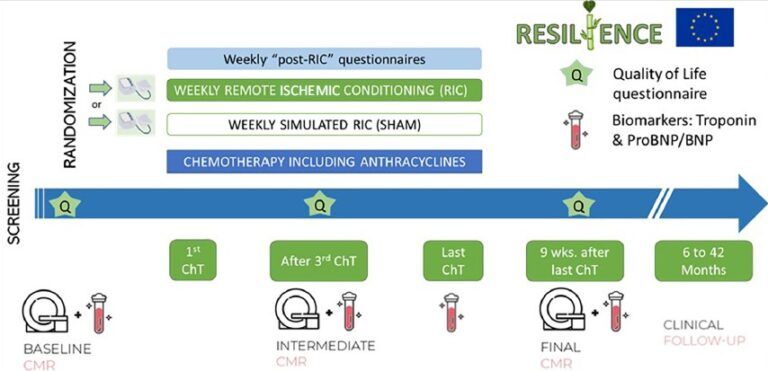
Patients participating in our RESILIENCE clinical trial use a novel technique so that cancer treatment does not affect their heart. The use of a cuff similar to the one to measure blood pressure in a way (remote ischemic conditioning) that we explain in detail, allows patients to finish their treatment with a strong heart, always under strict monitoring and control by our medical professionals.
If you are going to start a cancer treatment or know someone who is going to start it, we recommend that you consult with your oncologist if you would have options to participate in the RESILIENCE trial.
Our goal is to beat cancer with a stronger heart!