'/%3E%3C/svg%3E)
'/%3E%3Cpath%20fill='%23b2b2b2'%20d='M241%20382q0%2016%2017%2026%2017%2011%2042%2011t42-11q16-11%2017-26V269H241'/%3E%3Cpath%20fill='%239f7e00'%20d='M241%20379q0%2014%208%2023%209%209%2021%209%2014%200%2021-9%209-9%209-23V269h-59'/%3E%3Cpath%20d='M241%20339v-70h59v110q0%2014-9%2023l-6%205v-68h-15v72q-8%200-14-4v-68zm59%2040c0%2022%2015%2032%2029%2032%2021%200%2030-18%2030-32v-40h-59'/%3E%3Cpath%20fill='%239f7e00'%20d='M266%20277v5h2v12h-3v-5h2v-5h-9v5h2v5h-4v9h3v18h-5v10h34v-10h-5v-18h3v-9h-4v-5h2v-5h-9v5h2v5h-3v-12h2v-5zm42%20101q0%2010%206%2017%206%206%2015%207%2010-1%2016-7%206-7%206-17v-29h-43'/%3E%3Ccircle%20fill='%230044ad'%20cx='329.5'%20cy='372'%20r='6'/%3E%3Cellipse%20fill='%230044ad'%20cx='300'%20cy='340'%20rx='16'%20ry='21'/%3E%3C/svg%3E)


'/%3E%3C/g%3E%3Cuse%20href='%23c'%20transform='matrix(-1%200%200%201%20720%200)'/%3E%3C/svg%3E)









How research is changing the way we protect the hearts of people with cancer.
In recent years, cardio-oncology has evolved from an emerging discipline into a key area of cancer patient care.
As cancer survival rates continue to improve, preventing, detecting, and treating the cardiovascular complications associated with certain cancer therapies has become increasingly important. Thanks to ongoing research, we now have a better understanding of these risks and new tools to protect the heart before, during, and after treatment.
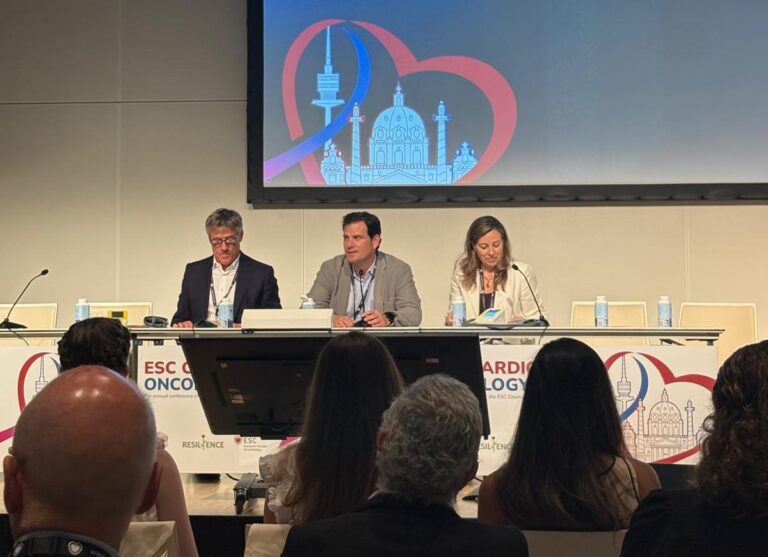
This progress is also reflected in the cardio-oncology congresses organized by the European Society of Cardiology (ESC) Council of Cardio-Oncology. These meetings have become leading forums for sharing scientific advances, discussing challenges, and bridging the gap between research and clinical practice.
In 2025, Florence hosted the first ESC Cardio-Oncology Congress, bringing together experts in cardiology, oncology, hematology, radiation oncology, and related disciplines to discuss advances in the prevention, diagnosis, treatment, and management of cardiovascular disease associated with cancer therapies. During this meeting, RESILIENCE shared key lessons from its Phase II clinical trial, which evaluates a preventive intervention against anthracycline-induced cardiotoxicity.
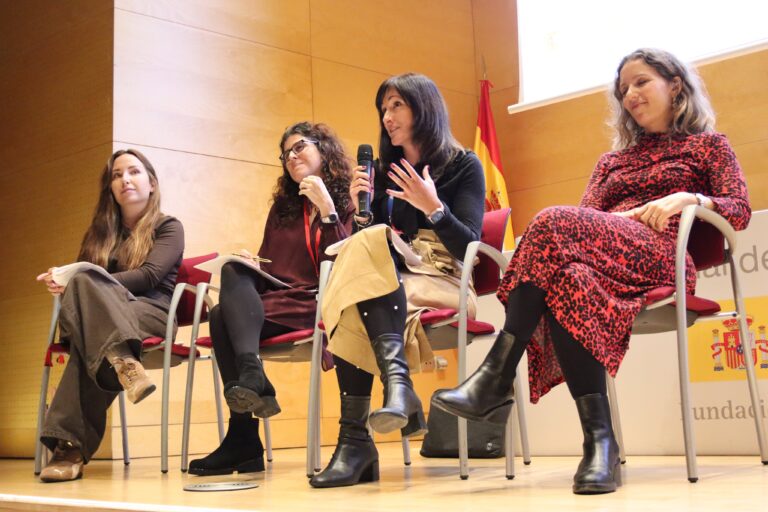
In 2026, Vienna welcomed a new edition of the ESC Cardio-Oncology Congress and, alongside it, the second RESILIENCE multistakeholder event, “Surviving Cancer with a Strong Heart.” The event brought together experts, researchers, patients, patient advocacy groups, and industry representatives to discuss new therapies for cardiotoxicity, cardiovascular toxicity in onco-hematology clinical trials, medical imaging, mental health, and the patient experience.
Against this backdrop, five major advances are expected to shape the near future of cardio-oncology.
1. Prevention Begins Before Cancer Treatment Starts
One of the most significant changes in recent years has been the recognition that cardiovascular protection should begin even before the first chemotherapy session or other cancer treatment is administered.
Today, the ESC Cardio-Oncology Guidelines recommend a baseline cardiovascular risk assessment for patients who are due to receive potentially cardiotoxic therapies. This evaluation considers factors such as age, cardiovascular history, hypertension, diabetes, cholesterol levels, previous treatments, and the type of cancer therapy being planned.
The goal is to identify, at an early stage, the patients who may require closer monitoring and targeted cardiovascular protection strategies.
2. Detecting Cardiac Damage Before Symptoms Appear
Until recently, cardiotoxicity was often identified only after clear signs of impaired heart function had already developed.
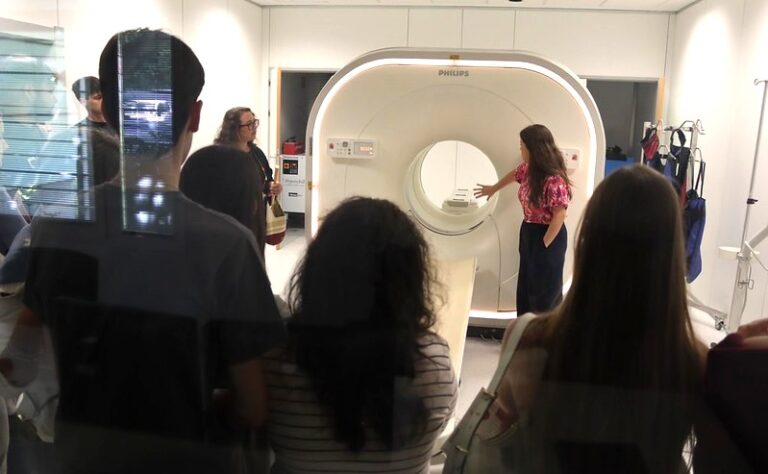
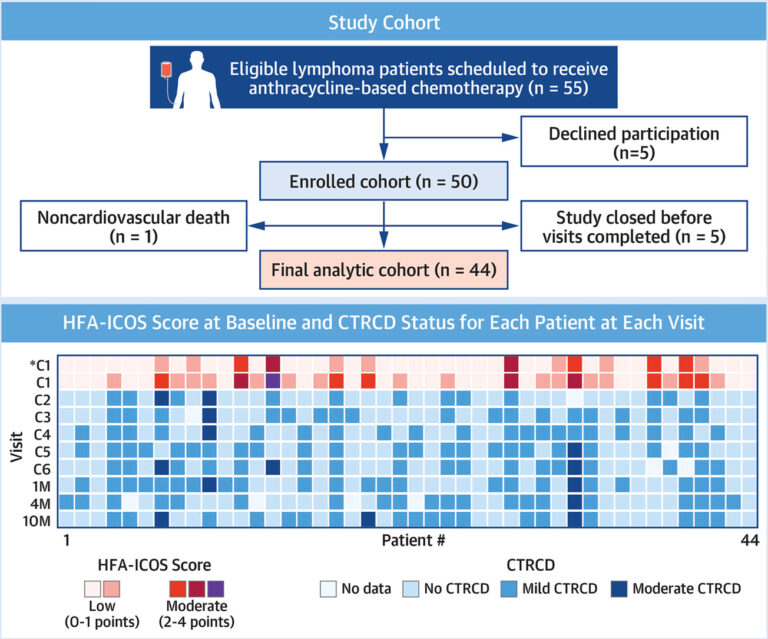
Today, the combination of advanced echocardiography, cardiac magnetic resonance imaging (MRI), and biomarkers enables the detection of subtle changes at a much earlier stage, even before patients experience symptoms.
This early detection allows for more accurate monitoring and supports timely clinical decision-making before the damage progresses.
3. Cardio-Oncology Is a Team Effort
Another major advance has been the consolidation of the multistakeholder approach.
Today, cardiologists, oncologists, hematologists, cardiac imaging specialists, nurses, and researchers work together to assess cardiovascular risk, determine the most appropriate monitoring strategy, and minimize unnecessary interruptions to cancer treatment.
The ESC guidelines recognize this collaborative model as one of the fundamental pillars of modern cardio-oncology.
4. Patients Play a Central Role
Research has also transformed the way we understand the role of patients.
Today, the focus extends beyond clinical parameters and diagnostic tests. Increasing attention is being paid to quality of life, symptoms, mental health, and the overall experience of individuals throughout their cancer journey.
In addition, many clinical trials now include patient-reported outcomes and patient-centered measures to better understand the real-world impact of treatments and develop strategies that address patients’ needs.
At RESILIENCE, this close relationship with patients is one of the cornerstones of our work. Supporting patients throughout their journey and enabling them to connect with others facing similar challenges provides valuable insights that can be integrated into the project, ultimately improving the participation experience for future clinical trial participants.
5. Clinical Trials Are Focused on Preventing Cardiotoxicity
Perhaps one of the most important shifts has been the evolving direction of research.
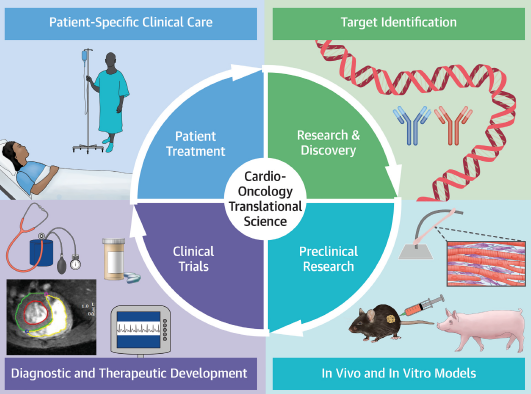
For many years, most studies primarily focused on understanding or treating cardiotoxicity after it had already occurred. Today, a growing number of clinical trials are investigating ways to prevent cardiovascular damage before it develops.
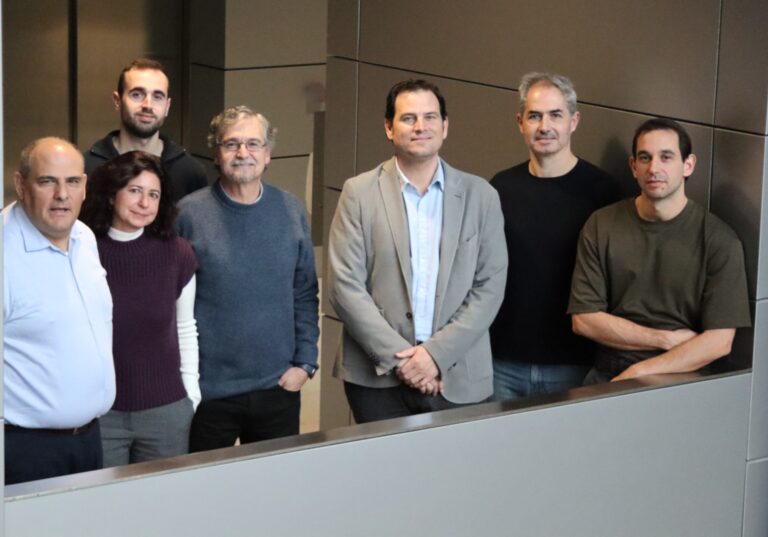
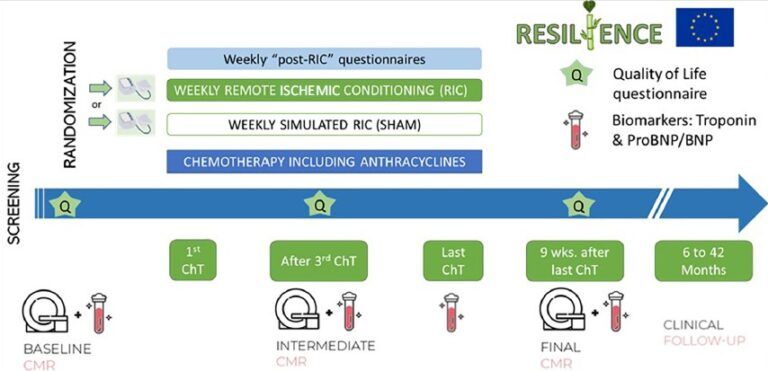
RESILIENCE is one such initiative. Funded by the European Commission, this European project is investigating new strategies to reduce the incidence of heart failure in patients treated with anthracyclines.
The clinical trial is evaluating the potential of Remote Ischemic Conditioning (RIC) as a preventive intervention to protect the heart during cancer treatment. The study also incorporates advanced tools, including cardiac MRI and biomarkers, to identify the earliest signs of cardiotoxicity.
Another distinctive feature of the project is its multistakeholder approach and the active involvement of patients, as discussed above. Their contributions help improve both the conduct of the trial and the practical applicability of its findings.
Looking Ahead
Cardio-oncology continues to evolve at a remarkable pace.
Personalized prevention, earlier detection, multistakeholder collaboration, and clinical trials designed to protect the heart are transforming the way people with cancer are cared for.
Each new advance represents an opportunity to further improve patients’ quality of life and ensure that surviving cancer also means preserving cardiovascular health.
💙 At RESILIENCE, we are working to ensure that research continues to bring us closer to this goal.