'/%3E%3C/svg%3E)
'/%3E%3Cpath%20fill='%23b2b2b2'%20d='M241%20382q0%2016%2017%2026%2017%2011%2042%2011t42-11q16-11%2017-26V269H241'/%3E%3Cpath%20fill='%239f7e00'%20d='M241%20379q0%2014%208%2023%209%209%2021%209%2014%200%2021-9%209-9%209-23V269h-59'/%3E%3Cpath%20d='M241%20339v-70h59v110q0%2014-9%2023l-6%205v-68h-15v72q-8%200-14-4v-68zm59%2040c0%2022%2015%2032%2029%2032%2021%200%2030-18%2030-32v-40h-59'/%3E%3Cpath%20fill='%239f7e00'%20d='M266%20277v5h2v12h-3v-5h2v-5h-9v5h2v5h-4v9h3v18h-5v10h34v-10h-5v-18h3v-9h-4v-5h2v-5h-9v5h2v5h-3v-12h2v-5zm42%20101q0%2010%206%2017%206%206%2015%207%2010-1%2016-7%206-7%206-17v-29h-43'/%3E%3Ccircle%20fill='%230044ad'%20cx='329.5'%20cy='372'%20r='6'/%3E%3Cellipse%20fill='%230044ad'%20cx='300'%20cy='340'%20rx='16'%20ry='21'/%3E%3C/svg%3E)


'/%3E%3C/g%3E%3Cuse%20href='%23c'%20transform='matrix(-1%200%200%201%20720%200)'/%3E%3C/svg%3E)






When the season changes… and so does the energy level
The arrival of spring is usually associated with more light, milder temperatures, and an increased sense of well-being. However, not everyone experiences it this way. For many, this change of season is accompanied by a persistent feeling of tiredness, lack of energy, or difficulty concentrating. This is what we know as spring fatigue, a common phenomenon that is part of the body’s adaptation process to environmental changes.
In the oncological context, this tiredness can take on a different dimension. People undergoing treatment or in the recovery process may experience more intense, prolonged, and difficult-to-manage fatigue: so-called cancer-related fatigue.
Spring fatigue: a process of adaptation for the organism
The change of season involves significant modifications in our environment: daylight hours increase, temperatures rise, and variations occur in biological rhythms. These changes force the body to readjust functions such as sleep, hormone secretion, and metabolism. During this adaptation process, it is common for symptoms to appear such as:
- Generalized tiredness
- A sense of lack of energy
- Daytime sleepiness
- Difficulty concentrating
- Changes in mood
In most cases, this is a temporary situation that improves within a few weeks. However, when the body is already in a state of greater vulnerability -as occurs during or after an oncological process- this adjustment can be more complex.
What is cancer-related fatigue and why is it different?
Cancer-related fatigue is one of the most common symptoms in cancer patients and survivors. Unlike usual tiredness, it does not always improve with rest and can significantly affect quality of life. Its origin is multifactorial and can be related to:
- The tumor process itself
- Oncological treatments, such as chemotherapy or radiotherapy
- Sleep disturbances
- Metabolic changes or anemia
- Emotional factors such as stress or anxiety
Additionally, some treatments can impact other systems in the body, including the cardiovascular system, which can also influence the perception of energy and tolerance for effort.
Why can spring intensify fatigue?
The coincidence of cancer-related fatigue and seasonal changes can make symptoms feel more intense. The body simultaneously faces two challenges: recovery or adaptation after an oncological process and readjustment to the changes inherent to spring.
Factors that may influence this include:
- Alteration of circadian rhythms due to increased light
- Changes in sleep quality
- Hormonal variations
- Higher demand for metabolic adaptation
- Increased sensitivity in people with active recovery processes
All of this can translate into a feeling of greater physical and mental exhaustion.
How to manage fatigue in spring
Although it cannot always be completely eliminated, there are strategies that can help improve quality of life during this stage:
- Listen to your body: Adapting your daily pace to the available energy level is fundamental. Recovery is not always linear.
- Maintain adapted physical activity: Gentle and regular exercise, adjusted to each person, can improve endurance, mood, and cardiovascular function.
- Prioritize rest: Maintaining stable sleep routines helps the body better adapt to seasonal changes.
- Take care of your diet: A balanced diet contributes to maintaining more stable energy levels and promotes recovery.
- Progressive exposure to natural light: Helps regulate biological rhythms and improve general well-being.
- Emotional support: Sharing how we feel and having support is also part of self-care.
A process that is part of the journey
Feeling more tired in spring does not always mean something is wrong. In many cases, it is the body’s response to the changes it is experiencing. In the context of cancer, it is important to remember that recovery involves time, adaptation, and support. Energy can fluctuate, and learning to identify those changes is part of the process.
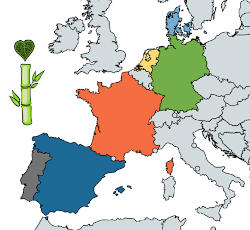
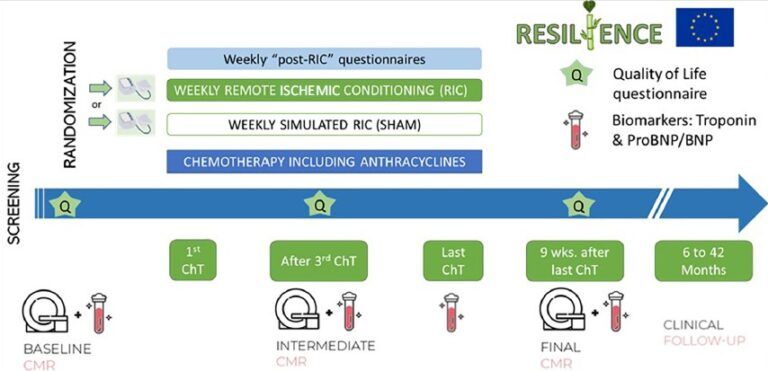
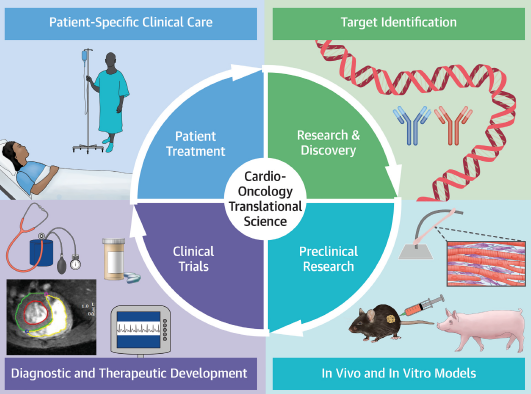
At RESILIENCE, we work to better understand how treatments affect the heart and how this influences people’s well-being, with the aim of moving toward more comprehensive, preventive, and personalized care. Because taking care of health is not just about treating the disease, but also about accompanying people through every stage of the process.