





Autumn brings shorter days, cooler temperatures that invite for warm clothing, and a routine that sometimes sets the pace again. This season often fosters a sense of tranquility; however, it may also be accompanied by increased fatigue, emotional fluctuations, or elevated stress levels.
For those going through an oncological process, these adjustments can be even more significant. The body and mind make an enormous effort, and the heart can feel the strain.
Sustained physical and emotional stress not only affects overall well-being but also has a real impact on cardiovascular health. And when combined with cancer treatments that may be cardiotoxic, paying attention to the heart becomes even more important.
Stress and the Heart: A Close Relationship
Stress activates the sympathetic nervous system and increases the release of adrenaline and cortisol. In small doses, these hormones help us respond to challenges, but if this activation persists over time -as happens when we live in “constant alert mode”- it can affect the heart.
The most common effects include:
- Increased blood pressure and heart rate.
- Metabolic changes (higher blood glucose and lipid levels).
- Inflammation that damages blood vessels.
- Endothelial dysfunction, which hinders proper circulation.
In the long term, this imbalance can lead to hypertension, arrhythmias, or heart failure.
With Cancer, the Impact Can Be Greater
During cancer treatment, the body faces a high-demand situation; some drugs and therapies can affect the heart, and chronic stress can amplify that risk.
Some studies, such as an analysis of NHANES (National Health and Nutrition Examination Survey) data on people with cancer, indicate that those with high levels of anxiety or depression have a 20–30% higher risk of cardiovascular complications and less favorable long-term health outcomes.
Strategies to Reduce the Impact of Stress
Taking care of the mind also means taking care of the heart. For this reason, several evidence-based practices are particularly beneficial during this season, including:
- Practicing mindful breathing, mindfulness, or relaxation techniques to reduce the physiological stress response.
- Engaging in adapted physical activity to improve mood, energy, and heart function.
- Seeking psychological or social support, as sharing the emotional process of seasonal change can help reduce anxiety and feelings of isolation.
- Maintaining healthy habits such as eating a balanced diet, getting adequate rest, and avoiding tobacco and alcohol.
These measures, along with medical follow-up, help protect the cardiovascular system and make cancer treatment more manageable.
At RESILIENCE, We Care for Your Heart Too
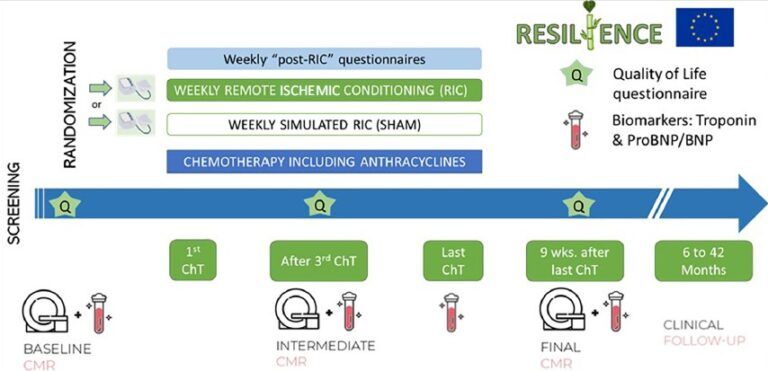
At RESILIENCE, we research how to protect the cardiovascular health of people with cancer by integrating prevention, scientific innovation, and emotional well-being.
Because during times of change and stress – such as those autumn can bring- taking care of your heart is also part of the treatment. 💙